Tuesday, February 26, 2013

Ranking Every Black Keys Album Ever

In 2010, I had just begun my Rolling Stone subscription as I attempted to inculcate myself with sub-mainstream pop culture and music knowledge. The hipster train was just starting to leave the station, and I, while decidedly NOT one of them, still found their tastes in culture to be suited to my own. Rolling Stone was a good magazine for me, because while it is decidedly at the fore-front of pop culture in America, it constantly gives a nod to the toiling indie generation of music, without casting shame on the bands that make it big, like Pitchfork does. One of the first articles I read was on the Ohio-band The Black Keys, who had just released their album Brothers and, as the magazine fortune-told, were on the brink of becoming an A-List, arena-filling act. I, as an eager teen looking for an edge in pop-culture conversations, watched the video for "Tighten Up" on YouTube and decided they were my new favorite band. This occurred approximately two weeks before "Tighten Up" could be heard on your local radio station every hour. Thus, I officially "was a Black Keys fan before everybody else", and I had accomplished my first mission of liking a band "before they became popular". My pretentiousness about them, and the rest of pop culture pretty much, has died down gradually since I've entered college, but The Black Keys remain my default answer for my favorite band of my generation. I've listened to every one of their songs countless times, and their live show at Merriweather last May was the finest concert I've ever been to.

With that introduction, here's my rankings of each of their albums. It's in order from least-favorite to favorite, not worst to best. Because The Black Keys have never made an album that could be considered "worst" - so this is only my personal preference of each of them in relation to one another.

7. thickfreakness (2003)


Thickfreakness is one of the band's bluesiest albums. And I do love it - some of the riffs on this album are my favorites that they've done. "Thickfreakness" and "Set You Free" are two fantastic songs, but like other albums in the band's repertoire, the album is pretty front-loaded.  I absolutely love the first three songs on the album, while the rest of it dips down a level. It also lacks the power of their debut. That said, while it lacks the excitement that others deliver, this album is one I could listen to over and over again without complaint.

6. The Big Come Up (2002)


The debut of The Black Keys, The Big Come Up is thirteen songs of raw, unrefined energy. It's straight-up blues produced in a basement, giving the album - and the band - its trademark garage sound. While the explosive, pure energy is fantastic, it also lacks the experience of their follow-up albums, but is still a great listen from start to finish. The songs are a bit shorter on this album than most of the other albums as well, and I'm personally a greater fan of their ability to stretch songs to four and five minutes. But if The Big Come Up was a stock, I would have invested it due to the clear potential of the band evident in 2002.

5. Attack & Release (2008)

Attack & Release is the clear turning-point of the band's transition into the mainstream. This was the first instance of their collaboration with producer Danger Mouse, and the result is a much smoother sound with some of the catchiest riffs the band has done. "I Got Mine" is one of their best songs, and watching them stretch it to eight minutes live was an amazing thing to see. "Strange Times" is another great track. The album lacks flow from start to finish and the best songs occur at the beginning, but Attack & Release shows the flashes of mainstream music that catapulted the band to stardom on their next albums.

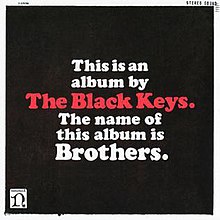
4. Brothers (2010)


The album that launched The Black Keys into the mainstream, Brothers is one of the best albums of the decade so far and proof that great rock music can still be popular. The band ditched Danger Mouse for the lyric-heavy, darker album about love and friendship, with the exception of "Tighten Up". It's a great listen, though my only real problem with it is its length of 16 songs, some of which on the b-side aren't as fantastic as "Tighten Up", "Next Girl", and "Howlin' for You". "Black Mud" is a brilliant instrumental song as well.

3. Magic Potion (2006)


So I was actually going to rank Magic Potion at the bottom of the list. But then I listened to it again today. The major-label debut of the band, Magic Potion delivers some of the most underrated music the band has ever made. "Your Touch" and "Goodbye Babylon" are two of my favorite songs, and the rest of the album provides the steady blues that makes The Black Keys great. The album loses its way in the middle I think, but once "Goodbye Babylon" comes on, the album finishes extremely powerfully.

2. El Camino (2011)


If Brothers is the album that got people to notice The Black Keys, El Camino is the album that made people stay. It's their acknowledgement of being in the mainstream and their roaring success to appeal to the masses. It's much less outwardly bluesy and highly produced (Danger Mouse came back for this one), but the band keeps to their roots and delivers a tour-de-force of an album from start to finish. "Little Black Submarines" is a hell of a song, and was maybe the best performance of a song I've ever seen live.

1. Rubber Factory (2004)


Rubber Factory isn't as built for the masses as El Camino. It's back before the band made it big, when they recorded in an old, abandoned tire factory. But the album is a true masterpiece from start to finish. What Rubber Factory lacks in high fidelity sound, they make up with catchy riffs and strong, bluesy lyrics. It's definitely the most listenable of the band's independent era, and lord knows what it would have sounded like if recorded in a professional studio. But the actual rubber factory gives the album its soul - its sound is authentic and real. It may not be for everybody, but Rubber Factory is pure dynamite and one of my favorite albums of all time.

Wednesday, February 20, 2013

My Final Oscar Predictions Post and why Award Shows Don't Matter

I realize it has been quite a long time since my last blog post. When I sat down the first time to start writing it, my goal was to document the awards season in movies and offer my opinions on the biggest films of the year. While I went to see multiple highly-touted movies this past year, I haven't really gotten around to watching the award shows that I always do. I just haven't been into it like I usually am. This is probably because Kathryn Bigelow's exclusion from the Best Director race for external political reasons is the straw that broke the camel's back, after many, many shocking exclusions and "victories" in these award ceremonies for movies that didn't deserve them.

I mean, let's look back in recent memory. The Artist won last year. I still haven't seen that movie. It's black and white and silent - pretty much a parallel of the excitement about film in 2011.

But then, there's the droll and boring King's Speech winning over The Social Network, a movie I didn't really enjoy, but was still the most relevant and hard-hitting film of 2010. And Bigelow's own Hurt Locker winning over Inglourious Basterds (not really in the conversation as other years, but still the wrong decision nonetheless) in '09 and Crash over Brokeback Mountain in '06 when post-9/11 social conservatism wouldn't let a better movie win because there were two men kissing in it. The list goes on and on.

And you know what? It doesn't matter at all. Everybody else has known this for a long time. I just haven't come to terms with it yet. Just because some producer gets handed a golden statue at the end of a boring, three hour celebration of the A-List doesn't make his movie the best of the year. It's just the opinion of a bunch of old white men. And as for my now former policy of watching every Best Picture nominee, I'm done with that too. I'm glad I didn't waste the hours it would have taken to get through Life of Pi, Amour, and Beasts of the Southern Wild, because I guarantee I would have hated all three of them.

With that, here is my final set of predictions for the Oscars (Only doing major categories this time):

Best Supporting Actress Nominees:
Amy Adams - The Master
Anne Hathaway - Les Miserables
Helen Hunt - The Sessions
Sally Field - Lincoln
Jacki Weaver - Silver Linings Playbook

Who Should Have Been Nominated: Frances McDormand (Moonrise Kingdom)
Who Should Win: Amy Adams
Who Will Win: Anne Hathaway

Amy Adams is unfortunately guilty of appearing in a movie that happened to come out a few months before Hathaway's Les Mis. It sucks, because she gave the best performance in a career littered with unbelievable supporting roles. Her Machiavellian, Lady MacBeth-like Peggy Dodd in The Master was one of the truly underrated characters in cinema of the year. Adams has always had a great presence on screen, and stood up to the overpowering Joaquin Phoenix and Philip Seymour Hoffman with a wicked ease. As for Anne Hathaway, she was pretty fantastic, but come on, I can rub some dirt on my face, cry for fifteen minutes of screen-time, and sing a song too. I don't think Hathaway did anything any other actress on her level couldn't do. And Amy Adams separated herself from every other actress in her generation in The Master.

Best Supporting Actor Nominees:
Alan Arkin - Argo
Philip Seymour Hoffman - The Master
Robert De Niro - Silver Linings Playbook
Tommy Lee Jones - Lincoln
Christoph Waltz - Django Unchained

Who Should Have Been Nominated: Leonardo DiCaprio, for Christ's Sake
Who Should Win: Hoffman
Who Will Win: Christoph Waltz

This is probably the most up-for-grabs category in the whole she-bang. Each of the nominees is a former winner, also an interesting point. I'd like to see Hoffman win for similar reasons as Amy Adams - his undaunting, truly scary presence on screen was completely unmatched by the other actors in this list. But for God's sake, I don't know who Leo scorned in his past life, but the man gets no gratitude from the Academy. He was brilliant, as he has been in his storied career. His exclusion, after playing one of Tarantino's finest characters ever, is a travesty.

Best Director Nominees:
Michael Haneke - Amour
Benh Zeitlin - Beasts of the Southern Wild
Steven Spielberg - Lincoln
David O. Russell - Silver Linings Playbook
Ang Lee - Life of Pi

I don't want to talk about it. If Kathryn Bigelow doesn't just go up on stage and take the award, the terrorists win. Spielberg's name will be in the envelope, though.

Best Actress Nominees:
Emmanuelle Riva - Amour
Jennifer Lawrence - Silver Linings Playbook
Jessica Chastain - Zero Dark Thirty
Naomi Watts - The Impossible
Quvenzhane Wallis - Beasts of The Southern Wild

Who Should Have Been Nominated: Kara Hayward (Moonrise Kingdom)
Who Should Win: Jessica Chastain
Who Will Win: Jennifer Lawrence

Ok, so I've only seen two of these movies. But the two I've seen are the important ones, and the award is either going to Chastain or Lawrence anyway. I'm going with Jennifer for the win, because she's got the momentum from the other awards and is riding the hot hand. People really, really like her because she pretends to be a lovable loser. She's relatable. It makes sense. Her Tiffany was also really, really well-acted. There's a lot of substance in her role and her performance was one of the best of the year. But she got to play off of a fantastic Bradley Cooper, Robert De Niro, and Jacki Weaver. The whole movie didn't revolve around her ability to be great at acting. It's just different for Chastain. The film depends on her ability to be as captivating and intense as she is. If she cracks even a little bit, the whole movie collapses. The final shot of Zero Dark Thirty, that's just the stuff of legend. I'll never be able to forget it, even if it is just a movie.

Best Actor Nominees:
Bradley Cooper - Silver Linings Playbook
Daniel Day-Lewis - Lincoln
Denzel Washington - Flight
Hugh Jackman - Les Miserables
Joaquin Phoenix - The Master

Who Should Have Been Nominated: Jared Gilman (Moonrise Kingdom), Logan Lerman (The Perks of Being a Wallflower)
Who I'm Glad Wasn't Nominated: Jamie Foxx (Django Unchained)
Who Should Win: Joaquin Phoenix
Who Will Win: Daniel Day-Lewis

I know my 'should' category is getting a little bit predictable here. But you have to see The Master to get it I think. The three main actors were really something else. But Phoenix, like Adams and Hoffman, has no chance. Day-Lewis will win, and I guess he was alright. I just really didn't like Lincoln and the man nearly put me to sleep. Just let me know when he decides to make another movie in four years.

Best Picture Nominees:
Amour
Argo
Beasts of The Southern Wild
Django Unchained
Les Miserables
Life of Pi
Lincoln
Silver Linings Playbook
Zero Dark Thirty

Who Should Have Been Nominated: The Master, The Perks of Being a Wallflower, Moonrise Kingdom, maybe even Skyfall
Who Should Win: Zero Dark Thirty
Who Will Win: Argo

Argo, at the beginning of awards season, was a non-factor. And then it won the Golden Globe. And the BAFTA. And everything else. And now it's the heavy favorite for Best Picture. And it was ok. Not a bad movie by any means, entertaining certainly, and filled up an hour and a half on an otherwise quiet Friday night. But this is the kind of Best Picture that will fall slowly into obscurity. It's an Ordinary People, a Dances With Wolves, a How Green Was My Valley. Zero Dark Thirty is Raging Bull, Goodfellas, Citizen Kane. It will live on, because the Oscars don't matter. What's in the hearts and minds of cinema-lovers for generations carry movies on, not a golden statue. And I've come to terms with that.

Sunday, January 20, 2013

Why Taylor Swift's I Knew You Were Trouble is the Song of 2012

I've been writing quite a bit about movies lately with award season in full swing. I'm in the midst of watching the three Best Picture nominees I haven't seen yet, and after I'm done with that I'll be writing the Top Ten movies of the year list as well as the Oscar prediction post. However, in the mean time, I figured I'd write another "...of the year" post.

I know there has been a lot of music released this year, and I've quite enjoyed a lot of it. Mumford and Sons came out with a new album that was just as good as the last one, Green Day unleashed a triple album of awesomeness, and The Lumineers released one of my favorite debut albums ever. But the biggest album of the year, regardless of what genre we all listen to, was definitely Taylor Swift's fourth studio album, Red. I'll readily admit that I enjoy Taylor Swift, but her recent departures from country-pop to producing straight-up pop music on Speak Now wasn't something I enjoyed as much. Speak Now disappointed in my opinion, but I was interested to see what she would do on Red - go back to her roots or continue to distance herself from country.

I think that on Red, Taylor Swift officially mastered pop music and captured pretty much all of the biggest elements needed for a successful pop album in 2012. Her songs were always catchy, which is why she's been successful. But on Red, she really brought her music to the next level. I'm not someone who dislikes pop music just because it's popular, and frankly, the songs on Red are all quite good. But one song, I Knew You Were Trouble, the third single, definitely sums up where we are in music today, and in my opinion is the song of 2012.

The first reason is its catchiness. As I said, Taylor Swift is a master of writing the catchiest songs ever. She didn't get lucky by being picked to sing a pre-written, formulaic song and become famous that way. She writes her songs herself and has helped to create the template for catchy songs as we know them. Taylor Swift has had a much bigger impact on music than is seen on the surface. Music executives are trying to capture her formula to put in other, less talented pop singers' songs. She is the spearhead of the industry. I Knew You Were Trouble, without even considering who wrote or performed it, is so catchy that after three listens, you can instantly sing the chorus. And unlike a song like Call Me Maybe, the song doesn't tire with repeated listens. This is because it's catchy, but it's also really, really good.

I Knew You Were Trouble isn't just the song of the year for it's catchiness, though. It's also Taylor Swift's foray into dubstep. Obviously, it's not a dubstep song, but it includes a bit of it to compliment the song. I took this as Swift's acknowledgement of the impact that dubstep has had recently in the music industry. It's an entirely new and revolutionary genre and even though I don't really enjoy it, I still know it has permanently impacted music. House music is so much different today than it was as recently as five years ago. Dubstep isn't a fad and it isn't going away, and I Knew You Were Trouble utilizes it better than any other pop song I've heard. It's a perfect harmony of pop and dubstep and frankly, if dubstep is used in this way more often, my opinion on it might change.

I think the powers that be will be trying to capture what Taylor Swift brought us with I Knew You Were Trouble for quite some time. But nobody can do what Taylor Swift does. She knows something we all don't. By the time they give us something that scratches the surface of this song, she'll have delivered something even greater. She's a step ahead. Taylor Swift is not going away, and I'm happy about that.

Tuesday, January 15, 2013

The Best Director Paradox, and Why the Academy is Terrible

I was going to write a full reaction to all of the Oscar nominees, but since the nominees were announced some time ago and the Golden Globes have just passed, I feel that the only category I have anything else to say about at this point is the Best Director nominees. Don't be sad, because I'll be breaking down the other categories in the Oscar predictions post, which will come closer to the actual award show.

The reason I chose the Best Director category for this post is because it is a pretty accurate summarization of the year in movies, and gives us evidence of how strong criticism from outside parties have already affected the Oscar race. Best Director is also an extremely subjective award, and this year, more than any other year in recent memory, we have a shift from including five strong nominees to excluding fantastic films based on pre-conceived ideas about them. In addition, there are only five slots for a Best Director nomination, as opposed to a maximum of ten for Best Picture, which creates a maddening paradox.

Why is this so? Just take a look at history. Over the past 26 years, 21 films have won both the Best Director Oscar and the Best Picture Oscar. Since 1999, only three Best Director winners have failed to see their film win Best Picture. The recent exceptions were ones I agreed with. In 1999 Steven Spielberg won the directing award for Saving Private Ryan, arguably his finest film outside of Schindler's List, but lost Best Picture when Harvey Weinstein bribed the Academy to vote for Shakespeare in Love. The other exceptions include Roman Polanski's 2003 victory for The Pianist (Chicago won BP) and Ang Lee for Brokeback Mountain in 2006 (Crash won BP).

Why does this matter? Because outside of five exceptions, the seeming definition of a Best Director winner is the person who directed the best film of the year (the Best Picture winner). They don't nominate the finest direction of a film, but rather the merit of the film itself. This is drastically unfair, especially in the past few years, when there have been more Best Picture nominees than Best Director nominees. We can basically cancel out the chances of an Argo, Zero Dark Thirty, or Les Miserables Best Picture victory because the Academy has already chosen their five best films for the Best Director nomination. The other three are included in the Best Picture category for entertainment purposes for the awards show itself, not because they stand any chance of winning.

The Best Director award is thus a severely flawed one for this reason. As I said, the films are not nominated for being finely directed, but for being good movies. Best Director should literally mean "Best Director", not "Person who's name comes last in the opening credits for the Best Picture winner". Let's look at Les Miserables. The movie had its problems, yes. It's been rightly criticized for bland in-your-face cinematography. But lest we forget, Best Cinematography is also an Academy Award. Best Director is an entirely different award. Tom Hooper took the risk of letting his actors sing live (which, in my opinion, paid off very well), and adapted the stage musical into a powerful, riveting film version. He directed this extremely difficult adaptation, something an ordinary director could not do. His ability to do so should have earned him a nomination.

The two most maddening and perplexing exclusions from the category, however, are those of Django Unchained's Quentin Tarantino and Zero Dark Thirty's Kathryn Bigelow. These exclusions did not happen because of concrete, technical issues like Les Miserables, but because of pressure put on the Academy based on the films' content. Tarantino's choices in Django Unchained (outside of letting Jamie Foxx play the lead) were all fantastic. Every element of the movie was absolutely sublime. He utilized the little things (soundtrack, staging, costumes, his own personal style) better than anybody in film this year. If not for the direction of Tarantino, Django Unchained would not have been as good of a movie as it was. However, it seems that the older, white voters of the Academy (average age in the mid-60s) didn't feel comfortable allowing Tarantino to be nominated for a movie about a slave killing slave owners. Tarantino is white, and made a movie that uses the N-word 109 times, and so he must be punished for it, plain and simple.

Last but not least, there's Kathryn Bigelow. My thoughts on Zero Dark Thirty and its exclusion have been made, but no words can really express how big of a travesty it is that she wasn't nominated (sealing the movie's fate for Best Picture, but that's beside the point). The movie was stunningly directed. I know there's a raging debate about the film's depiction of torture, but that doesn't matter. Frankly, a movie could contain nothing but a woman making grilled cheese sandwiches for an hour and a half, but if it's the best directed movie of the year, it should be nominated. And regardless of the subject matter, ZDT was brilliant. Federal lawmakers such as John McCain and Dianne Feinstein are taking the floor in Congress not to solve our fiscal cliff issue, but to criticize the finest film in a long while about it's torture scenes, which they HAVE NOT EVEN SEEN. And the Academy members are reading the "Does Zero Dark Thirty Promote Torturing Prisoners?" articles and have made the decision that they'd rather reward Lincoln, a three-hour self-congratulations for white people saving black people from slavery, than start a national controversy by nominating Kathryn Bigelow for the Oscar.

You suck, Academy of Motion Picture Arts and Sciences, and you should be ashamed of your cowardice.

Friday, January 11, 2013

Zero Dark Thirty and the Politics of the Oscars

It's been quite some time since my last blog post. I haven't really had much to say over the past few weeks, and now that I'm back in Pittsburgh, I am settled in and ready to begin writing more stuff, especially with the Oscars coming up. I'm planning on an Oscar reactions post later this weekend, but I wanted to hold off on commenting on the nominations until I had seen Zero Dark Thirty. Normally, I would have been all over the nominations from the second they were announced, but I couldn't do that until I saw the highest-acclaimed movie of the year.

Highest-acclaimed. 94% on Rotten Tomatoes. Universal praise from everybody, including Grantland writer Andy Greenwald, who said that ZDT made The Hurt Locker look like an episode of the Cleveland Show. So last night as I sat in my seat at the midnight showing, I knew this movie had to be incredible for me to like it, because I always have problems with my pre-viewing expectations. Especially with Kathryn Bigelow directing. I liked The Hurt Locker, but I loved about seven movies in 2009 and 4 of them are in or around my top ten films of all time. So going in I had the idea that Bigelow was overrated.

Well, I was wrong. Zero Dark Thirty is head and shoulders above every other movie I have seen this year. Everything about it was mesmerizing. From the opening scene, the viewer is dropped into the hunt for Osama Bin Laden and Bigelow does an outstanding job making you feel emotion with every bit of action. You end up feeling bad for everybody. The detainees, the CIA operatives, everybody. It's just such an engaging movie-going experience. One would expect to be rooting for Seal Team Six, but by the time the actual raid of Bin Laden's compound is happening, the intensity has been so encapsulating that there's no more emotion to do so. Instead, you're captured in the whirlwind of maybe the most visceral movie of all time, hoping that killing Bin Laden leads us to some sort of inner resolution. And after the final scene, which, in it's own right, contains the best final shot of any movie in recent memory, you're shaken to the core. I left the theater in stunned speechlessness and it took a solid ten minutes to put together a fragment of my emotions, which were left shattered in pieces on the theater floor, into words.

I would have no problems with Zero Dark Thirty winning every award it is nominated for. It is completely deserving of a landslide Best Picture, and Jessica Chastain should absolutely win Best Actress for the finest performance of any actor this year. But just as the Oscar race settled into a Lincoln -vs.-ZDT-for-Best-Picture affair, Kathryn Bigelow was shockingly left out of the Best Director nominations. Recent Oscar trends show that Best Picture and Best Director tend to fall hand in hand, and the Academy has seemingly made a statement that Lincoln will win both awards and sweep the Oscars.

I saw Lincoln a week ago, and didn't feel like I should write a blog post about it. It's just not my kind of movie. Daniel Day Lewis! Slavery! Freedom! It was boring to me, as I knew it would be when I sat down to watch it. It's a fine film, but it's pure Oscar bait, and frankly, I don't think it's that hard to make a great movie when you've compiled a bunch of A-listers debating over the most important events in American History. And I can see why people are loving it - because it's the kind of movie where you feel happy and accomplished at the end. That's the kind of movie that wins Best Picture.

Maybe it's the torture scenes, or that the events of May 1 happened too soon ago, or that Bigelow won the Best Director/Picture package in 2009. But simply put, Zero Dark Thirty was the best movie of the year. It was also the most important and the most engaging and frankly, I haven't had an experience like that in the theater for a long, long time. Five stars, and a pantheon-level movie for the ages.

Friday, December 28, 2012

Django Unchained and Its Place in the Tarantino-Scape

Perhaps no director in this era has a more distinctive style than Quentin Tarantino. Since the early 1990s, the Tarantino style has exploded into the mainstream and each of his films can be identified as a "Tarantino". Highly stylized, with bright colors, taking bits and pieces of several genres and mashing them up in graphic films, with bold soundtracks.

No element of Tarantino's films, however, is as important as the unforgettable characters in his films, who are among the most memorable in all of cinema. Mr. Blonde. Jules Winnfield. The Bride. Aldo Raine. Hans Landa. The list is long and well-deserved.

So, as I took my seat in the theater waiting for Django Unchained to begin, I knew what I was about to see. Approximately two hours and forty-five minutes of badassery, driven by what was sure to be a character in Django ready to become a legend, and strongly supported by the other elements of Tarantino's films that elevate them to pantheon level: outstanding direction, an amazing soundtrack, and witty, bold dialogue.

And as the movie went on, I found these always-reliable elements to be fantastic. The set, cinematography, and soundtrack were the best in film this year. I mean, Rick Ross in a spaghetti western? Only Tarantino could pull that off.

But something was missing. It was kind of like driving a $250,000 Ferrari with all its bells and whistles and trying to accelerate with the engine of a Toyota Prius. And on the drive home from the theater, I figured out what that missing element was. Frankly, Jamie Foxx was boring. He was downright flat, for the entirety of the movie. He had one expression on his face the entire time, and while his actions most definitely fit with other characters in Tarantino's movies, the actor playing him didn't live up to that badassery. He was simply overwhelmed by Christoph Waltz and Leonardo DiCaprio (who gave a brilliant and wildly entertaining performance in his own right).

I'm sure my point will be vastly disagreed with, but Django Unchained, to me, is the first Tarantino movie where the supporting elements of the film had to come in and save it from a boring main character. These elements were so fantastic that Django Unchained, as a whole, is still a very, very good movie. But Jamie Foxx dropped the ball on this one and I will vehemently disagree with his nomination for Best Actor when it comes from the Academy.

Tuesday, December 25, 2012

Les Miserables Review

Last night, I went to see Les Miserables at the 10:00 premiere. I had been waiting for this movie for most of the year, and I had seen the trailer (my favorite of all time) about thirty times. I suppose I should start this post with a bit of personal background, as many other reviews have done. I have never seen Les Mis performed on stage, but I've seen the 10th and 25th anniversary concerts multiple times and have listened to the soundtrack many, many times. I know the words to the songs, some of which are my favorite in music, theatre or not. "On My Own", "Do You Hear The People Sing", and "I Dreamed A Dream", among others, just pack such an emotional punch that nothing else can.

Sitting next to me was my mom, who has seen the show performed multiple times and knows the words as well. Next to her was my dad, who, though he has seen the show live, doesn't know the words, but still loves all movie musicals. Then at the end of the row was my brother, who hasn't seen the show and doesn't know any of the songs. Seeing the movie with my family, who have different perspectives, has really helped put the movie in context.

Now, to some actual reviewing. Personally, I loved the movie. I absolutely loved it. To adapt the stage version of Les Mis and put it on screen, with actors singing live on set, is a very, very difficult thing to do. Thus, after reading early reviews, my expectations were a bit tempered going in. I knew I couldn't expect perfection. But I was drawn in by the acting and the music immediately, which was fantastically pulled off. Everybody in the movie delivers a great performance acting-wise. As for the singing, I thought everybody did a great job as well, but there was a very clear divide between the theatre actors (Samantha Barks/Eponine, Eddie Redmayne/Marius) and the A-listers. Russell Crowe acted Javert very well, but he just couldn't keep up with the singing talent around him and the emotional ride slowed a bit as I realized Javert was Russell Crowe just trying his best to keep up with everyone else. That said, there was not a single song I didn't like and the biggest element of the film, the music, was great all around.

Cinematically, the movie could have been better. The direction didn't do much to help the film in any way. I wasn't focusing too much on the camera movements trying to keep myself together, but in hindsight I know that Tom Hooper shifted his style right from The King's Speech to Les Mis. Hooper isn't a great director camera-wise, but I do have to give the guy credit for managing to pull off a colossal project. The staging and set design was magnificent. The barricade (THE BARRICADE!!!!) was really well done, and though I have nothing to compare its visuals to, Hooper pulled that one off. 

So I've had the night and morning to think about the movie. I know that when I compile my favorite movies of the year list in a couple weeks, Les Mis will be near the top. But I think that's because it's Les-freaking-Miserables, not because it's a perfect movie by any means. I also understand that people who don't connect with the music like I do will have a hard time with the movie. My brother had no idea what was going on and the emotion was lost on him, and I get that. It's a hard movie to follow if you don't know what's being said (sung) or the plot. So I understand the harsher reviews the movie has gotten. That said, I wouldn't be upset if the movie won a lot of Oscars because I know how hard this project must have been. It won't be the best movie of the year, but it will be the grandest in scale. 

So should you go see the movie? 

If you're like my mom and me, absolutely. I can only assume that most of the people in the theater last night loved Les Mis going in, and by the end, you could hear sniffling and sobbing in the entire room. 

If you're like my dad, somebody who just really likes movie musicals, I would go see it. The music in Les Mis is better than every other musical's. 

Now, if you're like my brother, somebody who has no connection with the musical but just wants to go see a good movie, I would pull up a plot summary of the musical and read it a couple of times, and then go see it. The movie will be hard to follow otherwise. But if you have a little bit of background, I think you'll enjoy it for what it is.

Do you hear the people sing?
Singing a song of angry men,
It is the music of a people
Who will not be slaves again.......